
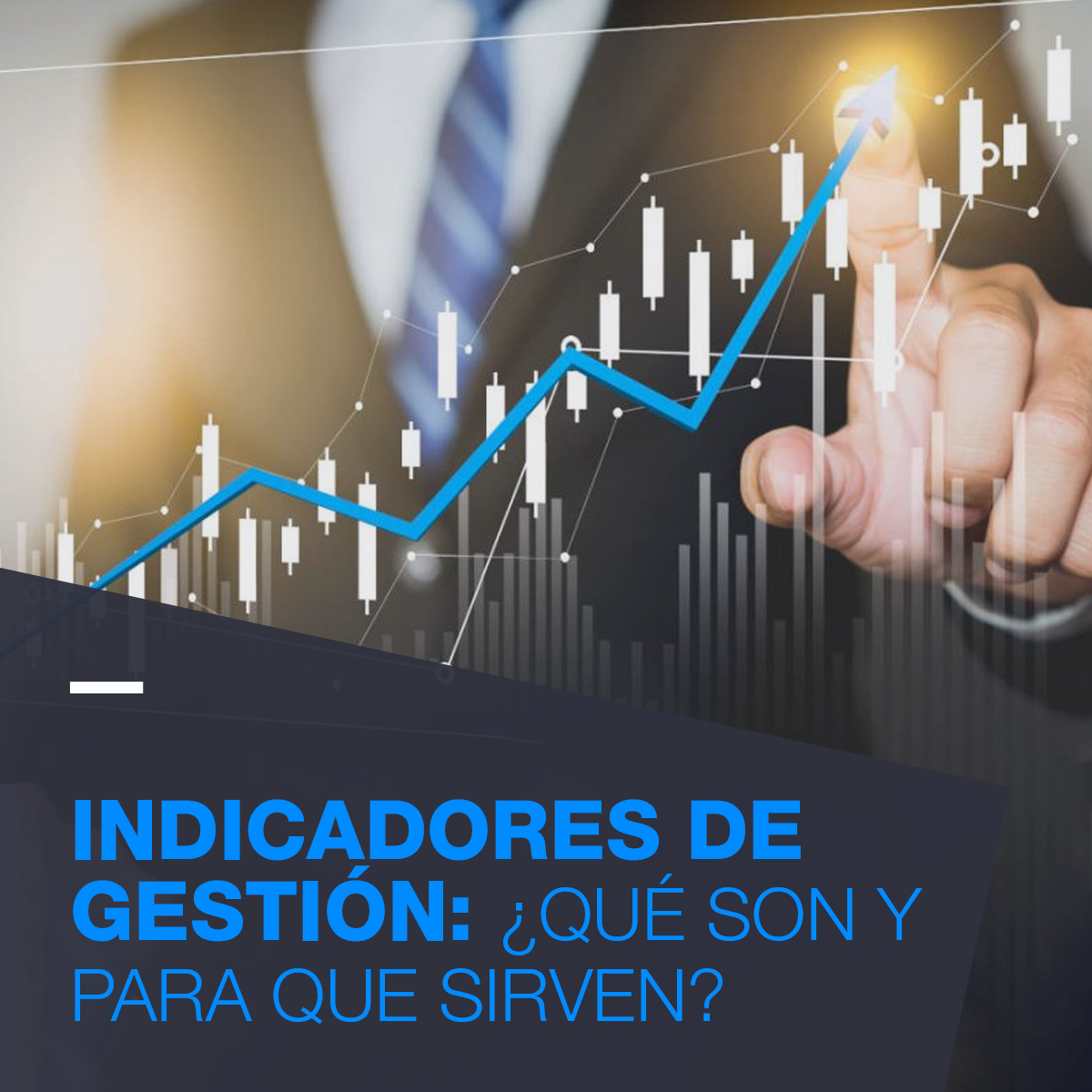
Management indicators make it possible to measure how far the company's objectives and goals are being met. They are organised so as to follow a logical tree that measures how performance on actions affects the objectives. For example: an area's actions affect the company's objectives, and a department's actions affect the objectives of the whole area. Their purpose is to evaluate the administration and operation of the organisation in both qualitative and quantitative terms.
To be efficient they need the following characteristics:
Objectivity: oriented towards qualitative indicators.
Precision: oriented towards quantitative indicators.
Compatibility with other indicators.
Relevance to decision-making.
Logic, feasibility, and ease of measurement and interpretation.
Timeliness and reliability.
Formulating management indicators requires:
Defining the objective to be reached.
Focusing on measuring results.
Agreeing them through a participatory process.
Formulating them by the deductive method.
Validating them against what is being measured in terms of: (a) their operational usefulness; (b) their functional implementation within the organisation.
The main questions that help us define the measurement are:
What is going to be measured?
Who will carry out the measurement?
What measurement mechanism will be used?
What deviation tolerances can be determined?
Who has an interest in the results of the measurement?
What will be done with the results?
Indicators must also make it possible to measure:
1. Objectives (strategic, general and specific):
Fulfilment: can be segmented by area, programme, project and activity.
Deviations that prevent fulfilment.
Contribution to tiered achievement (strategic, general and specific).
Delivery of the strategies.
2. Resources (budget, people, materials):
Efficiency, effectiveness and economy in the use and management of the organisation's resources.
The reach of the actions and the identification of deviations.
Core and supporting processes.
3. Productivity
Productivity and the performance level of the workforce.
Effectiveness and fulfilment in carrying out the processes.
Compliance with service standards.
Effectiveness in developing the processes.
The degree to which products and services meet the needs and expectations of internal and external customers.
Working climate.
The design of the indicators has to reflect the reach and development of the strategies set out, so each indicator needs goals and actions defined in time and scope. Only indicators that provide information relevant to decision-making and make the management process easier should be used.
Once the critical factors have been prioritised, targets are set for each of them. Targets are the figures that quantify the indicators.