
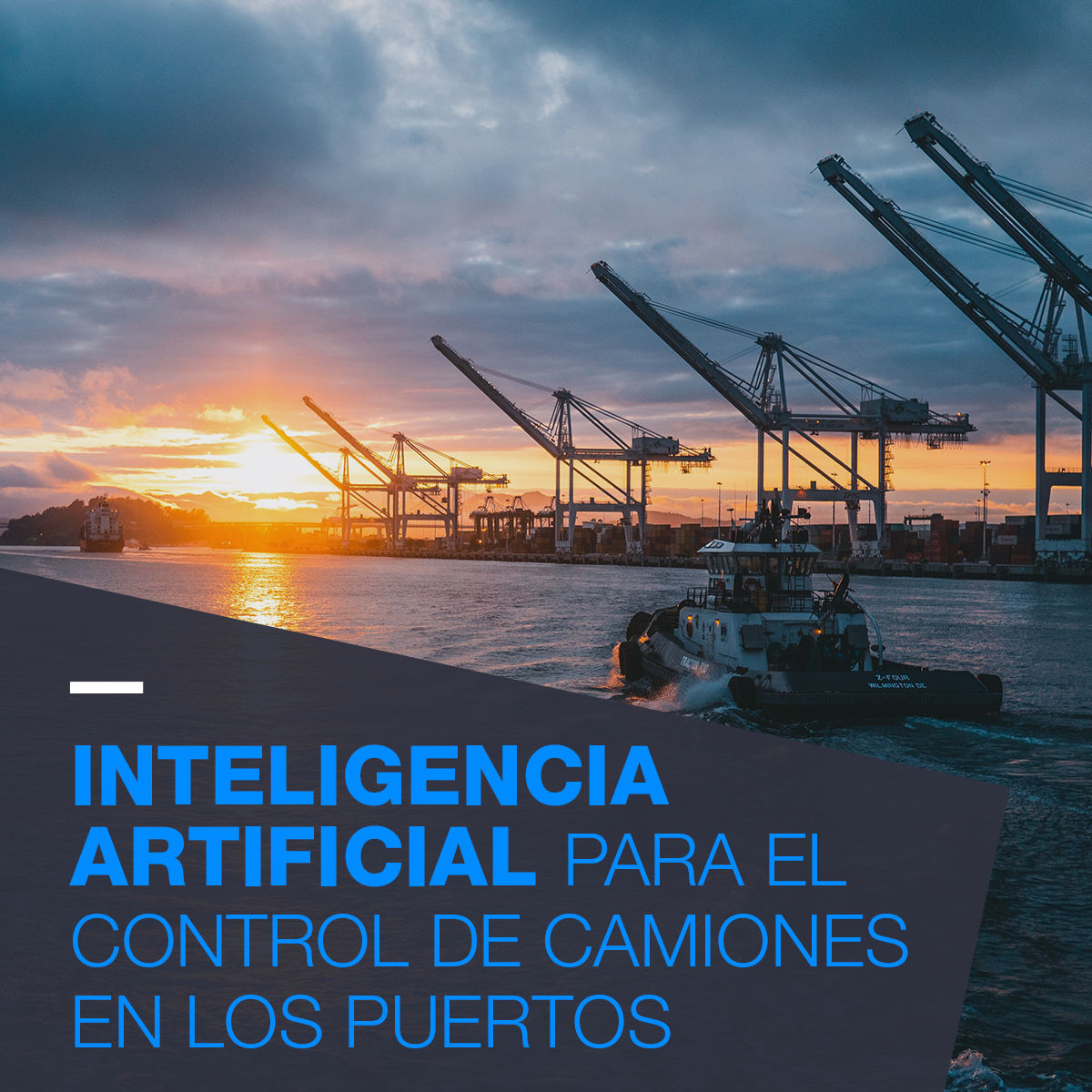
Port operators aim to reduce unproductive movement inside the port.
In recent years, significant free-trade agreements have been signed in order to promote international commerce. That means countries have to prepare their road and transport infrastructure to make import and export operations easier. A lack of infrastructure, compounded by inefficient management, holds back these activities — among other specific challenges tied to logistics.
Trade inside ports moves in containers, and container volumes have grown considerably worldwide in recent years: container ships are estimated to carry 52% of global maritime traffic today in value terms. Maritime container terminals therefore play an important role in this kind of trade; their primary function is transferring cargo from one mode of transport to another, along with temporary storage. The challenge is to reduce delays and eliminate bottlenecks within a terminal.
For perishable goods in particular, efficiency is tied to:
The efficiency of the logistics system
Effective connectivity between producing regions and the market
The reliability of supply chains.
The logistics systems of countries with sea access will therefore be increasingly bound up with the country's economic growth path. Supply chains have to build the efficiencies that let their goods reach their destinations on time and in proper condition.
Stacking containers in a maritime terminal's yard is one of the most important operations of all, mainly because of the bottlenecks that arise there and hit the terminal's efficiency indicators. Container stacking splits into loading and unloading operations. When those operations run, operators and managers have to determine the exact positions for containers, unload them or reposition them while making efficient use of the available storage space, reducing unproductive movements and transport costs, among other things.
On that basis a container terminal is a source of a wide variety of problems and opportunities that are mathematical in nature and therefore computational.[1] Artificial intelligence (AI) techniques can help us study computational models capable of carrying out activities characteristic of human beings, based on two of their essential features: (a) reasoning and (b) behaviour[2] — both of which can be applied to parts of the process inside terminals.
In that light, it is worth noting that one of the most critical and most visible problems at ports is the long queues of trucks entering and leaving the port area, which causes heavy congestion and creates knock-on disorder in operations.
We should seriously consider applying AI techniques to these challenges, so that we can estimate truck demand and reduce the risk of inefficiency. That first requires identifying information that is inaccurate, incomplete or insufficiently defined. After that comes the analysis of the problem's qualitative characteristics, in order to propose different solutions and then put them into practice.
[1] From “Revisión Bibliográfica sobre Funciones Objetivo para el Apilamiento de Contenedores”. ISSN 1988-3064. L. de Armas, C. Morell and R. Bello. Revista Inteligencia Artificial. Iberamia. Cuba. 2017. [2] From “Introducción a la Inteligencia Artificial”. Bruno López Takeyas. Instituto Tecnológico de Nuevo Laredo. 2016.